


 19.11.2021
  815
815 

Useful and important information for parents.
Stages of teething in babies (deciduous and molar teeth), when and how it happens, and why the dentist’s observation of the child is very important during this period. A newborn child does not have a single tooth, although there are exceptions. In some babies, intrauterine development is possible.
In total, in the first shift (milk teeth), there are 20 teeth, 10 each on the upper and lower jaws. The first baby teeth, which erupt in a child, are the two lower front middle flat teeth, which form at the age of 6-7 months.

Then a pair of opposite upper incisors appears on the upper jaw, this happens at 7-8 months.
Somewhere before 8-9 months, two more upper flat teeth are cut through, and during the last quarter of infancy, two more on the lower jaw become noticeable. And all this is only for the first year of life!
Therefore, the baby should have 8 full milk teeth before his first “anniversary”.

During the second year of life, the first milk molars and canines appear in the newborn. After another six months the second pair of primary molars grows. The formation of the entire milk series ends up to about three years. The child uses milk teeth for the next 4 years. After that, permanent molars grow in their place.
The changeover period lasts approximately five or six years, with an average of 7 to 12 years. But this time there will be 32 teeth, 16 each on the upper and lower jaws. The difference between molars and milk teeth is visible visually. The molars are larger than the milk ones, but they practically do not differ in shape.
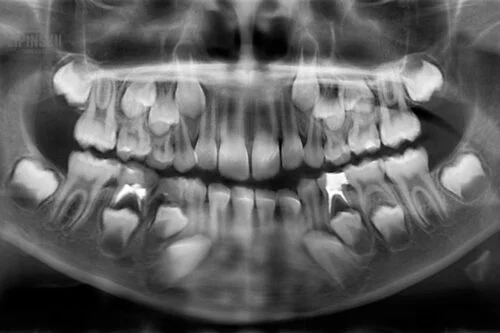
The formation of a permanent bite in children usually occurs in a more mature period and ends somewhere in the age of 15-18. This stage is marked by the appearance of the first molars of the lower jaw.
First of all, flat central teeth appear at about 8-9 years of age. When the child is 9-10 years old, the first pair of premolars is cut through.
At the age of 10-11, the child develops canines.
The second pair of premolars is formed at the age of 11-12.
The appearance of the last premolars falls somewhere between 12-13 years.
The so-called wisdom teeth appear at the age of 20-25 or later.
During the teething of baby teeth, we advise you to consult a pediatric dentist. The dentist-orthodontist pays attention not only to the appearance of the teeth and their general condition, but also to the position of the child’s teeth, which is just being formed. Violation of the order or timing of teething, the absence of a tooth requires the attention of two specialists, a pediatrician and a dentist, because they may indicate developmental abnormalities or significant disorders in the child’s body.
Our work

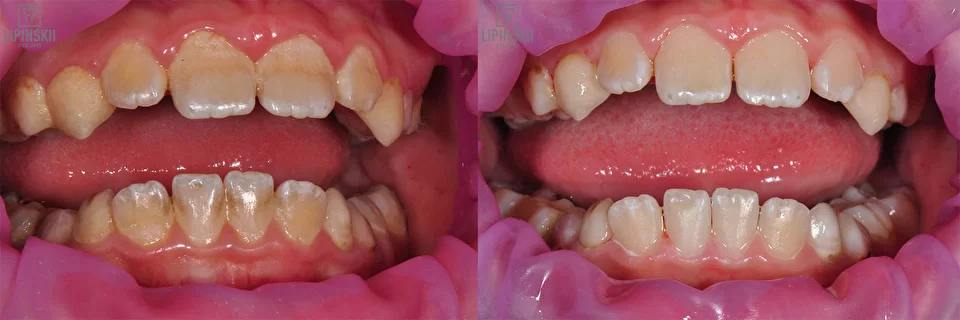
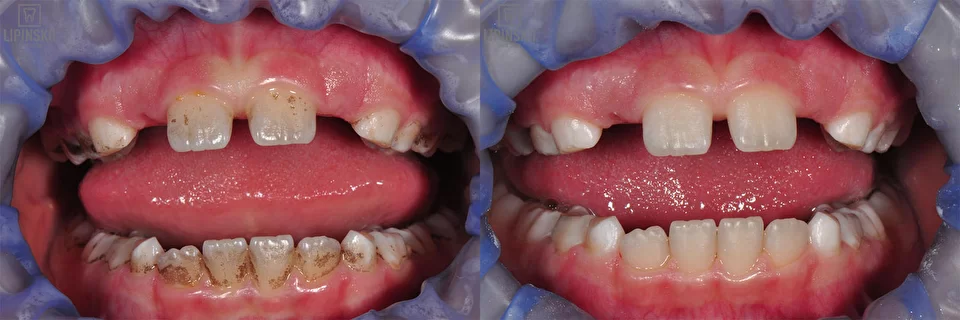



Дентал-центр «Ліпінський» надає всі види стоматологічних послуг, серед яких комп’ютерне та воскове моделювання виконують одну з важливих функцій, оскільки дозволяють провести моделювання максимально комфортно для пацієнта, щоб отримати гарний естетичний результат.


 (096) 626-76-76
Аркус Дигма – прибор, который определяет параметры движения нижней челюсти и программирует работу артикулятора. Так при изготовлении ортопедических конструкций максимально точно воспроизводится движения нижней челюсти, обеспечивая удобство их использования.
